The Department of Hearing and Speech Sciences celebrates the retirement of Lisa Rickard, AuD, who concludes her distinguished career at the University of Maryland this December.
Since joining HESP in 2010, Dr. Rickard has made remarkable contributions to clinical education, patient care, and community outreach. She has mentored hundreds of AuD students, guiding their growth with patient-centered, evidence-based care that has shaped the next generation of clinicians.
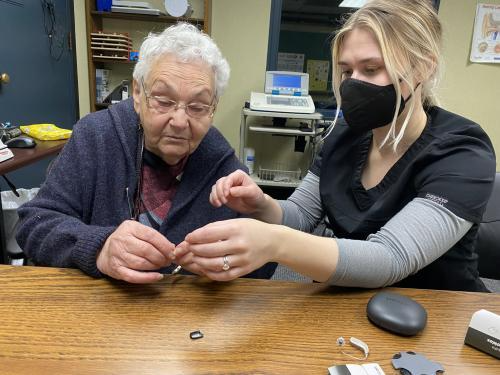
One of Dr. Rickard’s most impactful achievements has been her deep partnership with the Jewish Social Services Agency (JSSA). Through her leadership, HESP developed and sustained the Holocaust Survivors Hearing Aid Program, a collaborative effort with JSSA and hearing aid manufacturers to provide essential hearing services and amplification for survivors living in our region. Under Lisa’s guidance, the program has grown into a model of community-centered audiologic care, providing hearing aids and follow-up support for more than 150 Holocaust survivors. This initiative not only restored access to communication for these individuals but also offered students a meaningful opportunity to learn about trauma-informed care, cultural humility, and the profound impact of hearing health on quality of life.
Beyond her work with JSSA, Dr. Rickard led or co-developed several of HESP’s hallmark clinical and interprofessional initiatives, including the GAIT geriatric assessment team, IPE Day at the University of Maryland Medical Center, the Aging-in-Place initiative in West Baltimore, and the President’s Clinic at UMMC. She also launched monthly audiology services at Arlington Free Clinic and secured grant funding to support hearing aids for low-income patients. Her leadership in expanding the department’s Central Auditory Processing (CAPD) program and mentoring students in specialty diagnostics further strengthened HESP’s clinical excellence.
We are deeply grateful for Dr. Rickard’s dedication, compassion, innovation, and unwavering commitment to patient care and community service. Her collaborations exemplify the very best of what academic audiology can be. Please join us in celebrating her retirement and wishing her all the best in her next chapter.