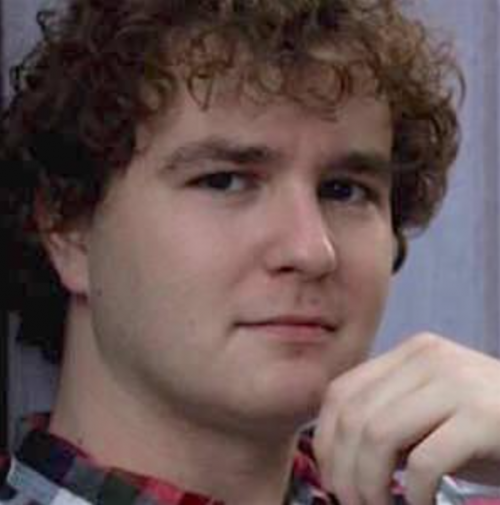
Ciaran Stone has been awarded a travel grant to present his research at the Association for Research in Otolaryngology (ARO) Meeting. His project, Subcortical Neuroplasticity Following Time-Compressed Speech Training in Older Adults, examines how auditory training may improve speech understanding in older adults by exploring changes in the brain’s neural responses to continuous speech.
|
Subcortical Neuroplasticity Following Time-Compressed Speech Training in Older Adults |
|
Background Older adults frequently experience central auditory temporal processing deficits that impair speech recognition in challenging listening environments. While behavioral auditory training using time-compressed speech (TCS) significantly improves speech understanding in older listeners at a sentence-recognition level, traditional subcortical electrophysiological measures, such as frequency-following responses (FFR) to isolated and repeated monosyllabic words, may fail to detect training-induced neuroplasticity. Traditional single-word or other punctate stimulus paradigms lack the dynamic, continuous acoustic and contextual properties of natural speech, likely not capturing the top-down cortical contributions to subcortical processing that influence everyday speech comprehension. Recently, measuring subcortical Temporal Response Functions (TRFs) to continuous speech via auditory nerve computational modeling has emerged as a novel technique, and it has not yet been applied to evaluate auditory training outcomes. This analysis applies continuous speech subcortical TRFs to an existing training dataset to determine whether TCS training drives subcortical neuroplasticity across young adult and older adult listeners.
Methods The analysis utilizes an existing dataset of 85 participants across three cohorts: young normal-hearing (YNH), older normal-hearing (ONH), and older hearing-impaired (OHI). Participants completed six 1-hour adaptive training sessions of either TCS (experimental) or speech-in-noise (SIN; active control) over 2-3 weeks. Pre- and post-training 64-channel EEG was recorded while participants listened to naturalistic audiobook passages in natural-rate and 40% time-compressed conditions. Continuous audio signals will be processed through a phenomenological computational model of the auditory nerve (AN) to generate high-frequency AN regressors. Regularized time-domain deconvolution across a 0–60 ms window will estimate subcortical TRFs to quantify peak amplitudes and latencies for auditory brainstem Wave V (~5–8 ms) and early thalamocortical SN10 (~11 ms). Linear mixed-effects models will evaluate neuroplastic changes across cohort, training type, session, and TCS compression rate.
Results Because traditional subcortical response measures lack continuous linguistic context, we hypothesize that continuous speech TRFs will uncover subcortical plastic changes previously not revealed using isolated monosyllabic FFRs. Specifically, TCS training is predicted to significantly shorten subcortical peak latencies and increase neural tracking precision to both TCS and normal-rate speech, particularly in older adult cohorts (ONH and OHI) who exhibit age-related temporal effects at baseline. We expect these subcortical enhancements to occur specifically following TCS training rather than SIN training, establishing a direct link between targeted temporally-based brain exercise and subcortical neural adaptation.
Conclusion This study represents the first application of continuous speech subcortical TRFs to an auditory training framework. By capturing subcortical dynamics during ecologically valid speech processing, this work addresses a potentially key limitation of traditional FFR paradigms. Demonstrating subcortical plasticity to continuous speech following TCS training will elucidate the lower-level neural mechanisms underlying perceptual learning and inform targeted auditory rehabilitation strategies for aging listeners. |
Ciarán Stone is a Graduate Research Assistant in Dr. Samira Anderson’s Hearing Brain Laboratory. His research focuses on translational auditory neuroscience investigating how the human brain adapts to, tracks, and processes continuous speech across the lifespan and in diverse populations, including older adults with hearing loss and second-language listeners. His work combines electrophysiology (EEG/MEG) and computational modeling to evaluate how targeted auditory training drives neuroplasticity to restore speech comprehension.