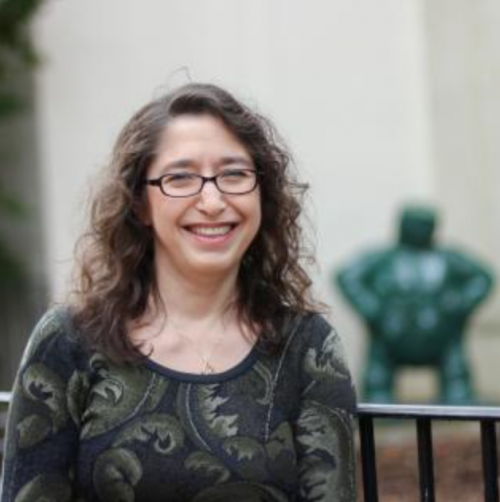
Rochelle Newman, MA, PhD, has been awarded an R56 grant to study the effects of noise in children’s home environments. Her project, How Noise in the Home Environment Impacts Children’s Development, will investigate the connection between children’s language development and exposure to noise. Co-investigators and consultants also include Rachel Romeo, Meg Cychosz, and Kate Von Holzen.
|
How Noise in the Home Environment Impacts Children’s Development |
|
Noise is ubiquitous in American society. The sounds of airplanes, traffic, and crowds can be found in most urban settings, and houses regularly include noise from HVAC systems, appliances, T.V.s, and even other people. Noise can cause substantial difficulties understanding spoken language, and children who attend noisier schools show poorer academic success. Yet despite all we know about how noise in the laboratory and classroom harms children’s perception and learning, we know almost nothing about how noise in the home impacts development. This is a fundamental gap in knowledge; some children are exposed to noisy environments most of their waking hours and understanding the real-world effects of such noise requires that we relate children’s everyday home experiences to their language outcomes. To address this gap, we analyze incredibly dense day-long recordings of children’s home environments and bring those same children to the lab to test their language representations, selective attention, and word-learning skills. We then directly link these two types of data at the level of the individual child. We predict that while noise at home is detrimental for building language knowledge (making it more difficult to understand speech from a caregiver and build robust linguistic representations), some experience with noise may be necessary to stimulate the development of selective attention skills; children from overly quiet home environments, who do not regularly need these skills, may have more difficulty when they leave home for a noisy school environment. We therefore predict that children with some noise in the home will be less distracted by noise, and better able to learn new information from noisy environments, than either those with too little or too much home noise. In this way small amounts of noise can serve a protective function, spurring children to learn the skills they will later need when they are expected to sit still in a busy classroom and learn math and geography. The proposed studies will provide essential novel information to evaluate and improve existing models of language development, which largely assume unrealistic, quiet listening and learning conditions. The studies will also have vital implications for child-rearing practices, in thinking about how differences in childcare quality and home environments might impede or enhance language development or exacerbate effects of language delay. Moreover, research suggests that children from poorer families are both more likely to live in noisy environments (as a result of poorer quality housing and crowding) and to attend more crowded, noisier schools; thus understanding the impact of noise is also critical to appropriately target limited resources for remediation and to reduce inequities in learning environments. |
Dr. Rochelle Newman is a Professor in the Department of Hearing and Speech Sciences at the University of Maryland and has served as Chair of both HESP and the University Senate. Her research focuses on speech perception and language acquisition, particularly how the brain recognizes words in fluent speech, especially in noisy environments, and how these abilities change throughout development. She received the BSOS Outstanding Graduate Advisor Award in 2013 and was named a Distinguished Scholar-Teacher in 2020–2021.
Rachel Romeo, PhD CCC-SLP serves as a co-investigator for the new research initiative. Dr. Romeo is a developmental cognitive neuroscientist and licensed speech-language pathologist broadly interested in how children’s early experiences, both favorable and adverse, influence their neural, cognitive, and academic development, with a specific focus on language and literacy development. She directs the Language, Experience, and Development (LEAD) lab, where she employs interdisciplinary methods from developmental psychology, cognitive neuroscience (including structural and functional brain imaging), and direct educational interventions to study how young brains adapt to varying environments and lead to unique developmental paths. She is especially interested in socioeconomic differences in development, and how translational cognitive neuroscience may better support educational equity. Dr. Romeo’s research is funded by the National Institutes of Health, the Institute of Museum and Library Services, the Jacobs-CIFAR Research Fellowship, the Brady Education Foundation, and the Brain & Behavior Research Foundation. She has received early career awards from the International Mind, Brain, Education Society (IMBES), Flux Society, Society for Research in Child Development (SRCD), American Speech Language Hearing Association (ASHA), and Association for Psychological Science.
Meg Cychosz, PhD, a former postdoctoral scholar at UMD and Assistant Professor at Stanford, will also serve as a co-investigator on this research. Dr. Cychosz investigates how infants and children develop speech and language, including children who are d/Deaf or hard-of-hearing and multilingual learners. Her research bridges linguistics, cognitive science, developmental psychology, and electrical engineering to understand fundamental questions about language acquisition. Her interdisciplinary approach combines fieldwork with computational methods, using deep learning and automatic speech recognition tools to analyze naturalistic speech recordings from children's daily lives. She is particularly interested in how children's processing limitations might influence the structure of the world's languages, how sensory experiences like hearing loss affect language processing in early childhood, and how technological innovations can make language research more accessible and representative.
Kate Von Holzen, PhD, is a former postdoctoral scholar at UMD, and will serve as a consultant on the grant. Dr. Von Holzen is a researcher in developmental psycholinguistics. She earned her PhD in Göttingen, Germany, in 2010 and joined the Seminar for English Philology at the Georg-August-Universität Göttingen as a Researcher and Lecturer in 2026. Her research focuses on language development and psycholinguistics, with additional teaching experience in linguistics and psychology.